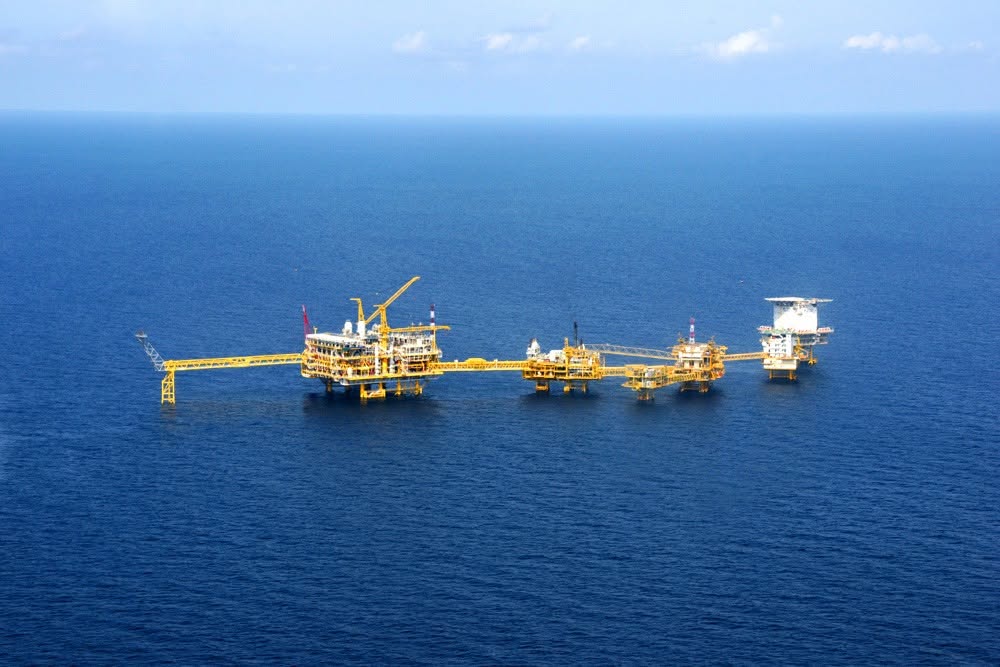
Back in December 2025, Mike Wirth, Chairman and CEO of Chevron, gave an interview at the WSJ CEO Council in which he discussed growth opportunities in new energy — biofuels and geothermal energy in particular.
What interests me isn't simply that a global oil company is turning its attention to renewables. It's why Chevron is interested in geothermal.
Wirth sees geothermal as a business that lines up directly with capabilities Chevron has spent decades accumulating in oil and gas:
Geology • Geophysics • Subsurface • Reservoir • Seismic • Drilling • Horizontal Wells • High-temperature Engineering • Large-scale Project Execution
Put simply, the knowledge and technology once used to drill for hydrocarbons can be extended to drill for heat.
That distinction matters.
Chevron isn't looking at geothermal merely because it is renewable, but because it matches the company's core competency and can deliver firm power continuously, 24/7 — something that grows steadily more valuable in a system with rising shares of solar and wind, and with new electricity demand emerging from data centers and AI.
Chevron Hasn't Stopped at Words
Chevron had already invested in and built partnerships around advanced geothermal, including closed-loop geothermal technology and joint project development with various partners.
More notably, during 2024–2025 Chevron took geothermal leasehold positions in Nevada and Utah to evaluate their potential for Enhanced Geothermal Systems (EGS) — an approach that applies drilling and subsurface expertise to unlock heat resources that previously could not be developed.
Separately, the Weepah Hills project in Nevada, operated by Baseload Power U.S. (with which Chevron has a business relationship), has an estimated potential of around 30 MW and remains in the permitting and drill-planning stage.
So in the period since Wirth's interview, while we have yet to see Chevron establish a dedicated unit called "Chevron Geothermal," the direction is reasonably clear: geothermal is being positioned as one of the emerging energy opportunities that can build on the company's existing strengths.
What Does This Have to Do with Thailand?
This is where it gets interesting.
Chevron has a long history and a deep knowledge base in Thailand, rooted significantly in Unocal Thailand.
In 2005, when Chevron merged with Unocal Corporation, Unocal Thailand Ltd. was renamed Chevron Thailand Exploration and Production Ltd. The knowledge, experience, and people who had developed the petroleum industry in the Gulf of Thailand over several decades became part of a technical heritage that has carried forward ever since.
Thailand, therefore, is not starting from zero.
Over the past several decades, we have developed a large pool of Thai professionals with expertise in:
- Petroleum geology
- Geophysics
- Seismic interpretation
- Subsurface modeling
- Reservoir engineering
- Well planning
- Drilling and completion
- Production engineering
Alongside them are the service companies, contractors, universities, and government agencies that grew up together with Thailand's petroleum industry.
Chevron has noted that over the course of its operations in Thailand, the company developed a number of important technologies to cope with the complex geology of the Gulf of Thailand — including horizontal drilling and techniques that cut drilling time from roughly 60 days to just 6 days in certain field development configurations.
This is Thailand's intellectual capital, and it should not be overlooked.
The Real Question
The question may not be "can Thailand do geothermal?"
It may instead be: how do we take the knowledge accumulated through the success of Thailand's oil and gas industry and extend it into geothermal?
If a global player like Chevron is thinking
Geology + Subsurface + Drilling → Geothermal
then Thailand — home to Chevron, PTTEP, many former Unocal/Chevron personnel, and a large community of oil and gas specialists — likely has the human capital and technical capability to begin as well.
We don't need to start with a large geothermal power plant. We can begin with the most basic steps first:
Data compilation → Geothermal Atlas → Temperature Gradient → Geophysics → Slim Hole → Deep Test Well → Pilot Project
The purpose is to know, from real data, where the heat beneath Thailand actually is, how deep it sits, how hot it is, and whether it can be developed commercially.
Because what the petroleum industry has taught us all along is this: a resource only acquires economic value once we go out and explore and prove it.
So — What About Thailand?
Mike Wirth and Chevron are betting that knowledge built in oil and gas can go on living in the new energy world.
Is it time for us to take decades of knowledge from Unocal, Chevron, PTTEP, and the Thai petroleum industry — knowledge built by drilling for hydrocarbons — and extend it toward drilling for heat, and seriously prove out Thailand's geothermal potential?
We don't need to believe how much geothermal energy lies beneath Thailand. We should invest enough to know whether it's there or not.
That would be the best possible starting point for a forward-looking energy policy.
#Chevron #MikeWirth #UnocalThailand #ChevronThailand #Geothermal #EnhancedGeothermalSystems #EGS #ThailandGeothermal #OilAndGas #EnergyTransition #EnergySecurity #DrillForHeat #DataCenter