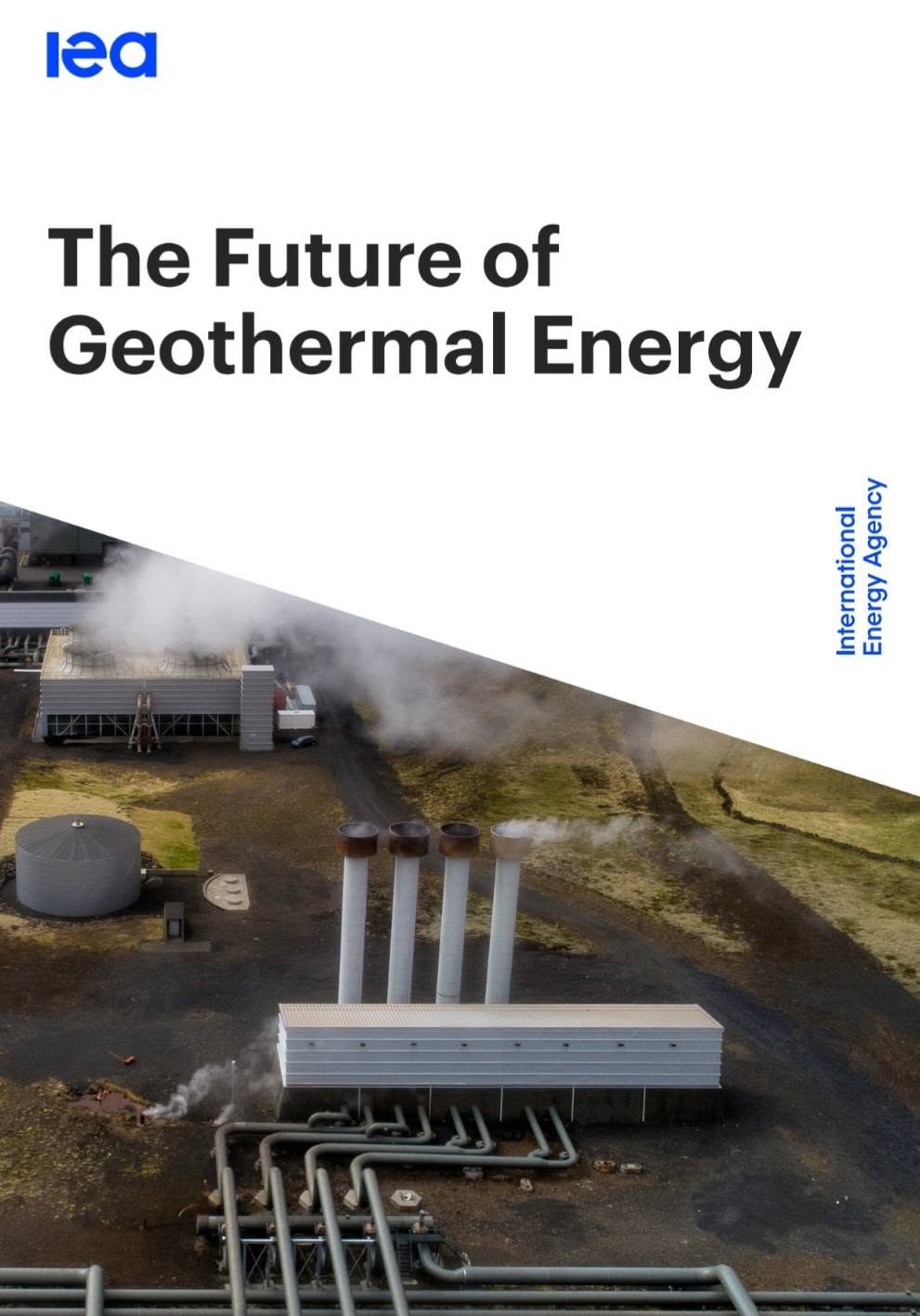
Geothermal means drawing on the heat stored beneath the Earth's surface to generate electricity, provide heating, or run cooling systems. Its key advantage is that it can operate 24 hours a day — no waiting for the sun, no waiting for the wind — and it uses relatively little land at the surface.
In 2023, geothermal power plants worldwide ran at an average capacity factor of more than 75%, compared with under 30% for wind and under 15% for solar PV. This makes geothermal a useful contributor to grid stability, and a good complement to solar and wind rather than a competitor meant to replace them entirely.
From a Site-Specific Resource to a Potentially Global One
Geothermal has traditionally been seen as suitable only for countries with volcanoes or high-temperature hot springs — Iceland, Indonesia, Kenya, or the Philippines.
But new technologies are changing that, including:
- Deep drilling and horizontal wells
- Creating flow paths through hot rock
- Subsurface reservoir modeling
- Technology transferred from the oil and gas industry
Together, these are making underground heat accessible in far more places outside volcanic zones. They are known collectively as next-generation geothermal, which includes Enhanced Geothermal Systems (EGS).
The IEA estimates that if the technology continues to advance and costs keep falling, geothermal could meet as much as 15% of the growth in global electricity demand through 2050, reaching roughly 800 GW of installed capacity and generating nearly 6,000 TWh per year — equivalent to the current combined electricity demand of the United States and India.
In a scenario where costs fall substantially, next-generation geothermal alone could supply around 8% of the world's electricity in 2050. That growth, however, still depends on investment, regulation, exploration risk management, environmental factors, and public acceptance.
So How Does Thailand Fit In?
Thailand may not have active volcanoes, but it does have a considerable base of resources and existing data, including:
Hot springs, deep sedimentary basins, granite formations, fault zones, petroleum wells, groundwater wells — and people with real experience in geology, drilling, and subsurface development.
None of this proves that a power plant could be built anywhere in the country. But it is enough to say that Thailand should begin surveying and assessing its potential seriously, rather than concluding in advance that the resource isn't there.
The right starting point, then, isn't building a large power plant immediately. It's more basic work:
Producing a national geothermal resource map, compiling subsurface temperature data, measuring geothermal gradients, drilling small exploratory wells, and establishing clear legislation and a permitting system.
Geothermal and the Road to Net Zero 2050
Thailand has raised its ambition to net zero greenhouse gas emissions by 2050 — 15 years earlier than its previous target — along with a goal of cutting net emissions by 47% by 2035, conditional on international support.
Reaching that target cannot rest on a single energy source. Solar and wind will remain the backbone, but as their share of the mix grows, the grid will increasingly need clean power that runs continuously — enough to supply factories, electric vehicles, cooling systems, and data centers that require reliable electricity around the clock.
Geothermal could therefore serve as 24/7 clean energy that complements solar, wind, energy storage, and other sources, giving the power system a combination of cleanliness, reliability, and flexibility.
Thailand doesn't need to decide today how many thousands of megawatts geothermal can deliver. What it should decide is this:
When will we begin systematically exploring the clean energy resources beneath our own feet?
Because the road to Net Zero 2050 doesn't only call for the energy we can see in the sky. Thailand may also need the energy hidden beneath its own ground.